
Ahl al-Bayt (a.s)
Ahl al-Bayt (a.s)
The term Ahl al-Bayt (as) refers to Muhammad’s (S) family (excluding his wives), his Wasi, cousin and son-in-law, Amir al-Muminin Ali ibn Abi Talib (as); his daughter Fatima (as); his grandsons al-Hasan (as) and al-Husayn (as); and, in each era, an Imam appointed by Nass from the direct descendants of Muhammad and Ali.
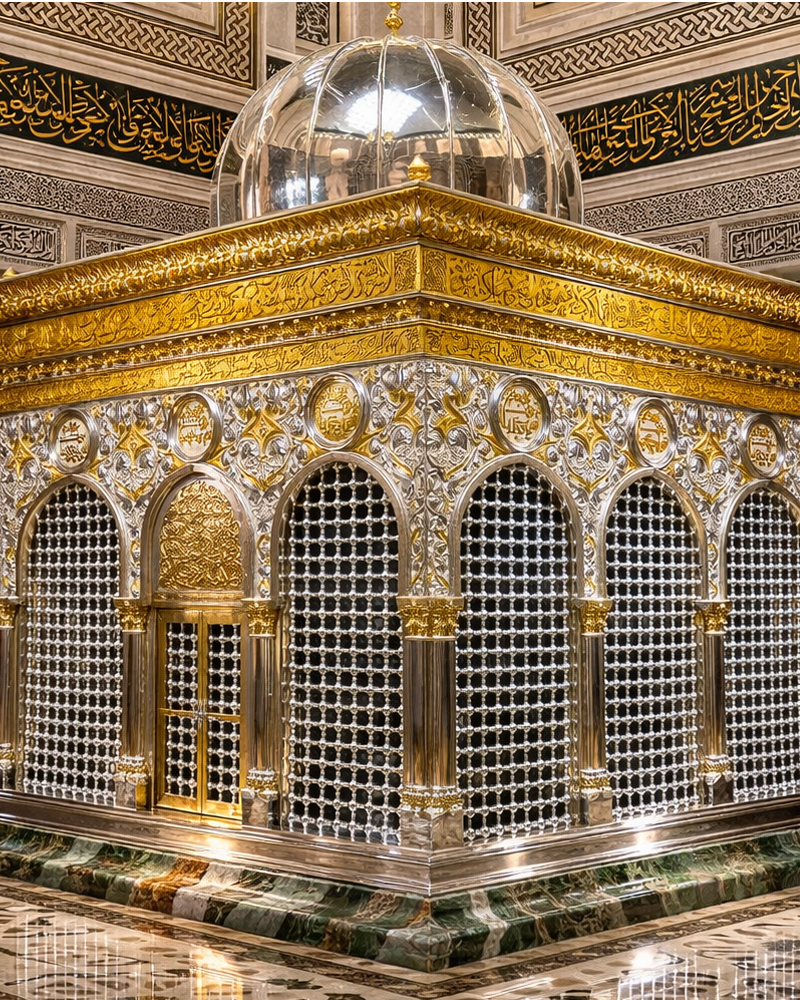
The term Ahl al-Bayt (as) refers to Muhammad’s (S) family (excluding his wives), his Wasi, cousin and son-in-law, Amir al-Muminin Ali ibn Abi Talib (as); his daughter Fatima (as); his grandsons al-Hasan (as) and al-Husayn (as); and, in each era, an Imam appointed by Nass from the direct descendants of Muhammad and Ali, known as Al Imam al-Zaman (as). He is the custodian of the sacred legacy of ‘ilm and Hidayah for generations. The Shia know them as the Aimmah Tahireen (as) – those who are spiritually pure and immune from both physical and spiritual error. Shi’i traditions explain Ahl al-Bayt (as) in Ayah Qurba and Ayah Mubahalah. In Shi’i writings, the term Ahl al-Bayt is often used broadly for all descendants of Ali and Fatima. But in theological works, it is usually reserved for Ali, Fatima, Ḥasan, Ḥusayn, and the remaining Imams. Institutions of Ahl al-Bayt (as), such as the Rawdat al-Nabi (S), Mashhad of Amir al-Muminin Ali ibn Abi Talib (as), graves of Sayyidah Fatima (as), grave of Al Imam al-Hasan (as) in Jannat al-Baqee, Mashhad of Abi Abdillah al-Husayn (as) in Karbala al-Muqaddasah, Raas al-Imam al-Husayn (as) in Al Muizziyyah al-Qahirah, and other Mashahid of Ahl al-Bayt (as), are known as Atabaat Aliyyah. After Baytullah al-Haram, Masjid al-Nabawi, Masjid al-Aqsa, the leading Masajid are al-Masjid al-Azam in Kufah, Jame al-Azhar, Jame al-Anwar, Jame al-Aqmar, Jame al-Juyushi, Jame Tulun, Jame al-Mahdiyyah, Jame Zijiblah. All these Masajid played historic roles in disseminating Ta‘lim – teaching Islam as it was taught by the Ahl al-Bayt (as) through an intellectual method suited to the needs of their era. When love for the Ahl al-Bayt (as) is sincere and firm, it protects the devotee from the sins of lust and licentiousness, and guards against destructive vices such as gambling, Riba, Zina and Fawahish, envy, malice, and spite. The Walayah of the Imam of the Ahl al-Bayt (as), who is Safinat al-Najat, the ship of salvation, guides the Mumin to the final destination: Alam al-Quds.
Our Articles
To see more articles, please scroll down